 VA-TEK Engineering
A relay test set is quoted as a configuration, not as a product. Two instruments that both inject three currents and three voltages can sit far apart in cost, and the gap is rarely on the front panel: it is in channel count, per-phase power, accuracy, software and calibration evidence.
Key takeaways
- Price follows the configuration: channels, per-phase VA, accuracy, software, process-bus capability, calibration scope.
- Channel count cannot be added later; differential schemes need six currents at once.
- Per-phase VA, not the ampere figure, decides whether a set drives an electromechanical relay.
- Calibration, training, spares and freight usually sit outside the quoted price.
1. Why there is no single price
A relay test set is a small power system with a measurement system around it, and neither part is commodity hardware:
- Phase count. Three current channels cover feeder, directional, distance and frequency schemes; six cover both ends of a differential zone at once.
- Output capacity. Power per phase, in VA, sets what the set pushes through the relay coil and leads.
- Accuracy class. A 0.5 % set and a 0.1 % set both inject; only one carries an uncertainty budget an acceptance report can defend.
- Software. Local operation, PC control, scheme templates, reports and licensed seats, some of it every year.
- Calibration. Traceable, accredited or none is a line item, and it is what makes a result defensible.
- Freight, duty and lead time. For an instrument of this weight, not a rounding error.
2. The cost drivers in one table
| Item | Entry level | Mid range | High end | Effect on price |
|---|---|---|---|---|
| Channels | 3 I + 3 V | 3 I + 4 V | 6 I + 6 V | Rises steeply per current channel |
| Current per phase | 0–6 A | 0–40 A | parallel, above 100 A | Rises with VA, not the ampere label |
| Voltage per phase | 3 × 120 V | 4 × 120 V | 6 × 120 V, plus 240 V L-L | Moderate, second to current |
| Accuracy | 0.5% | 0.2% | 0.1% or better, traceable | Rises sharply above 0.2% |
| Embedded PC | none | local mode, no PC | ruggedised, battery | Moderate; changes workflow |
| IEC 61850 | none | analog injection only | SV/GOOSE publish and subscribe | Largest single step |
| Software | manual control | test library, reports | scheme automation, licensed seats | Purchase plus recurring cost |
The first row decides most of the total, because it cannot change after delivery.
3. Channel count: the decision that cannot be upgraded
Feeder overcurrent, directional, distance and frequency protection are three-phase work: three currents and three voltages, one loop at a time. A three-phase relay test set with four voltage channels covers that list.
Differential protection is the step up. Transformer, generator, busbar and line schemes compare currents from two or more locations, so the test has to reproduce that comparison with every end live at once. Slope, harmonic restraint and ratio compensation are proved by the relationship between two current sets, not by injecting one end and then the other. A six-phase relay test set makes both windings carry current simultaneously.
A set bought for three-phase work can be given software, training and leads, but not a fourth current channel. If the scheme list contains one differential zone, six channels is the right starting point. The reasoning is in how to choose a relay test set.
4. Output capacity: the burden question
A current channel is rated in amperes, but what it must deliver is power into a load: the relay coil plus the test leads, both resistive. An electromechanical relay can draw several tens of VA at pickup, and a long lead pair adds more. The set must hold the required current into that total at the accuracy it claims.
A set that produces 40 A into a short circuit may fail to reach 40 A into a heavy burden. At the panel the current plateaus below the setpoint, or the relay does not pick up at the multiple the test sheet calls for. Portable sets answer this with a parallel mode that ties channels into one high-current output. Size on the heaviest relay in the fleet and keep margin for lead length; the secondary injection testing guide covers where output and burden meet.
5. Accuracy, interface and software
Accuracy is quoted as a percentage of reading, and the figure only means something with its conditions: range, load, temperature and traceability of the reference. A 0.2 % instrument is the working grade for protection testing; 0.1 % or better serves calibration laboratories and acceptances that must survive an audit.
Two costs sit behind that figure: the measurement chain — shunts, dividers, isolation, a stable reference — and the evidence, an accredited certificate being a service with its own scope and interval. Check that it covers current, voltage, phase angle and binary timing, not just the current generator.
The interface is a second decision. A set needing an external PC is cheaper; an embedded computer runs stand-alone at a kiosk substation. Software above manual control — element libraries, reports, scheme automation — is maintained and usually licensed per seat.
6. IEC 61850: the digital-station tier
Process-bus testing is a different class of instrument, and it is the largest single step in the table. A conventional set injects analog quantities at the relay terminals. A digital substation relay has no analog terminals: it subscribes to Sampled Values from a merging unit and publishes trips over GOOSE. Testing it means publishing simulated Sampled Values into the process bus, subscribing to the relay’s GOOSE messages and time-stamping what arrives.
That is a protocol stack, a network interface and a timing discipline, not an option on an analog amplifier, which is why such a set is quoted separately from an analog set of the same channel count. If any part of the programme is a digital station, say so at the enquiry stage. An analog-injection instrument suits conventional numerical relays; it will not verify GOOSE, and discovering that during commissioning costs more than the difference in price.
7. Three ways of saving money that cost more
Not enough current channels for differential schemes
A three-channel set cannot energise both ends of a transformer differential zone at once. The workaround — inject one side, record, inject the other, infer — never exercises the slope characteristic, harmonic restraint or vector group compensation as one live comparison. The scheme is signed off on a test that did not reproduce its operating condition.
Not enough output capacity for high-burden relays
An electromechanical relay with a heavy current coil needs real VA, and a set sized for numerical relay inputs will not deliver it. The current plateaus below the setpoint, or the relay refuses to pick up at the specified multiple, so the test is extrapolated from a lower multiple. That is an assumption, not a measurement.
No IEC 61850 capability on a digital station
Without Sampled Value publishing and GOOSE subscription, a digital substation relay cannot be tested from the injection side. The bay is left untested, or the work waits for another contractor’s tool and another outage window. Neither appears in the purchase price; both are paid for in schedule.
8. Whole-life cost, not just the purchase order
The equipment figure is the entry point. Four lines keep accruing over an eight- to ten-year life:
- Calibration. An accredited recalibration on a one- or two-year interval, priced per scope, plus freight both ways and the days the instrument is absent.
- Software and firmware. Test library updates, new relay families, additional seats.
- Spares. Test leads, connectors, clamps and fuses, consumed faster on a busy programme.
- Downtime. A set out for repair in an outage window is replaced by a rental priced for urgency.
A correctly specified set is usually cheaper over its life: a second mobilisation to redo a test costs more than the step between configuration levels.
9. Six things to prepare before you ask for a price
- Test object. Relay families and schemes in scope, including whether any differential zone spans more than one end.
- Voltage level and ratios. System voltage, CT and VT ratios, and the injection values the test plan works in.
- Applicable standards. Test methods and acceptance criteria, and whether an accredited certificate is required.
- Channel requirement. Current and voltage channels per test point, and whether parallel high-current output is needed.
- Quantity and portability. How many sets, whether they travel, and whether operation without a PC is required.
- Delivery point and date. Destination, import terms, and the outage window the instrument must be on site for.
With that list you can request a quotation against a defined configuration, so answers become comparable. The cable side follows the same logic: VLF test set pricing works the same way.
10. Where to go next
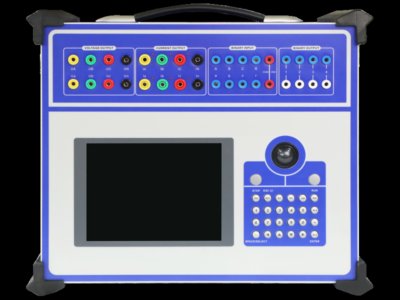
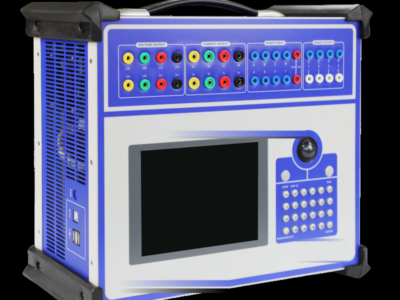
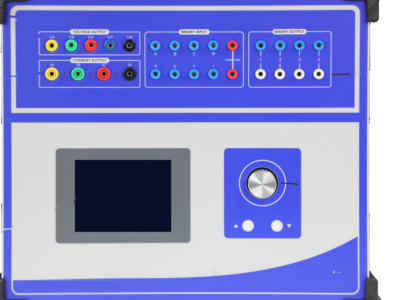
Start from the scheme list, then the burden. VA-TEK builds the VAE-430 three-phase set and the VAE-660 six-phase set, both from Shenzhen Feso Automation Technology Co., Ltd.